

20 company swag ideas employees actually keep in 2026
30.07.2026Author — Chris
Manager
Contents:
What Separates Kept Swag From Discarded Swag
Apparel Worth Wearing
Accessories People Actually Use
Desk, Drinkware, and Tech
How to Roll It Out Without Waste
A Quick Reality Check
Walk past any office storage closet and you'll find the graveyard: stress balls with a logo nobody recognizes, tote bags stacked twenty deep, branded lanyards still in shrink wrap. Companies spend real money on this stuff, and most of it ends up in a drawer or a donation bin within a month.
The problem usually isn't budget. It's that swag gets chosen by committee, ordered in a panic before an event, and picked because it was cheap per unit rather than because anyone would want it. The fix is simple in principle: give people things they'd plausibly buy themselves.
What Separates Kept Swag From Discarded Swag
Before the list, two patterns worth noting.
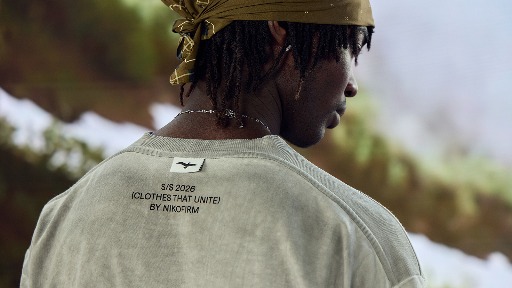
Logo placement matters more than logo size. Employees will wear branded gear in public if the branding is subtle: a small embroidered mark on a sleeve, a tonal print, a debossed logo on leather. A chest-sized logo turns a jacket into a uniform, and people don't wear uniforms on weekends.
Usefulness is not the same as novelty. A branded bottle opener is novel. A branded insulated bottle is useful. Novelty items get a laugh at the unboxing and nothing more.
Apparel Worth Wearing
Clothing is the biggest category and the easiest to get wrong.
- Heavyweight hoodies. One of the most-kept items in most swag programs. Spend the money here: 350–450 GSM fleece, proper shoulder construction, and real sizing including women's cuts.
- Quarter-zip pullovers. More versatile than a hoodie for anyone who takes video calls. Works in an office and on a hike.
- Knitted sweaters. A step up from fleece for teams that want something less casual. Reads as a gift rather than as event merch.
- Polo shirts. The reliable choice for client-facing teams and conferences, where a hoodie is too casual and a shirt is too formal.
- Long sleeve tees. Quietly the highest-wear item in most wardrobes, and the cheapest way to get a subtle tonal print right.
- Lightweight packable jackets. Higher price point, but these become the item people actually mention to friends.
- Bomber jackets. The showpiece of a merch line. Best for milestones and anniversaries rather than bulk distribution.
- Raincoats. Genuinely useful in most of Europe, and worn far outside the office.

Accessories People Actually Use
- Beanies and caps. Cheap to produce, high wear rate, and a small logo looks natural on both.
- Merino or performance socks. Underrated. People notice good socks, and the branding hides inside the cuff.
- Scarves. An easy winter shipment item, and one where a tonal woven mark beats any printed logo.
- Quality tote bags in heavy canvas. Not the flimsy conference kind. 12 oz canvas or heavier, with reinforced handles, and it holds up to years of grocery runs.
- Backpacks. The highest perceived value in the accessories category. Worth reserving for onboarding or senior hires.
- Laptop sleeves. People who commute need one. Neoprene or felt, sized correctly for common 13", 14", 15", and 16" machines.
- Passport holders and card wallets. Especially good for teams that travel. Leather or a decent vegan alternative, with a small stamped logo.
- Blankets. Sherpa or waffle-knit throws end up on couches at home. High cost per unit, extremely high retention.
Desk, Drinkware, and Tech
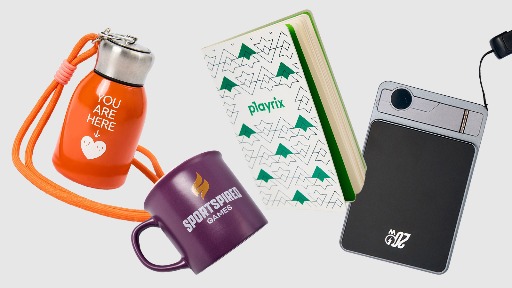
- Insulated water bottles. The category leader for a reason. Choose a 20–24 oz size with a leakproof lid; anything bigger tends to stay on a desk instead of traveling.
- Ceramic mugs with real weight. Thin promotional mugs chip in a week. A 12 oz stoneware mug with a comfortable handle joins the rotation permanently.
- Notebooks with decent paper and a good pen. 90–120 gsm, lay-flat binding. Thin paper bleeds through and the notebook gets abandoned after one use – and a single well-built pen outlasts a box of plastic ones.
- Compact power banks and multi-port cables. Aim for a bank that delivers at least two full phone charges, with USB-C in and out. The three-in-one cable lives in a bag forever.
How to Roll It Out Without Waste
- Let people opt in. A swag store or a choice of three items beats mandatory distribution and dramatically cuts waste.
- Ship to homes for distributed teams. Nobody carries a blanket home from the office.
- Time it to something meaningful. Onboarding, work anniversaries, and project launches all beat random Tuesday deliveries.
- Plan around lead times. Custom production runs three to five weeks on average, so a winter shipment gets decided in autumn, not December.
- Ask afterward. A one-question survey six months later tells you what got kept and what didn't. Most companies never check.
A Quick Reality Check
Quality beats quantity, every time. If you're deciding between two options and one is clearly nicer but you can only afford half as many units, buy half as many. Give the good version to the people it's meant for, and skip the tradition of handing something to everyone at every event. Swag works when it feels like a gift, not a handout.
The companies that get this right treat merch as part of how the workplace feels rather than as a marketing line item – the same way they'd think about office design, benefits, or how a first week is structured.
Author — Chris
Manager