

Onboarding swag kits: what to include for office and remote hires
06.10.2026Author — Roman Romanov
Manager
Contents:
Why Onboarding Swag Matters More Than People Think
Core Items Every Kit Should Have
What to Add for Office Hires
What to Add for Remote Hires
Keeping Kits Practical and Sustainable
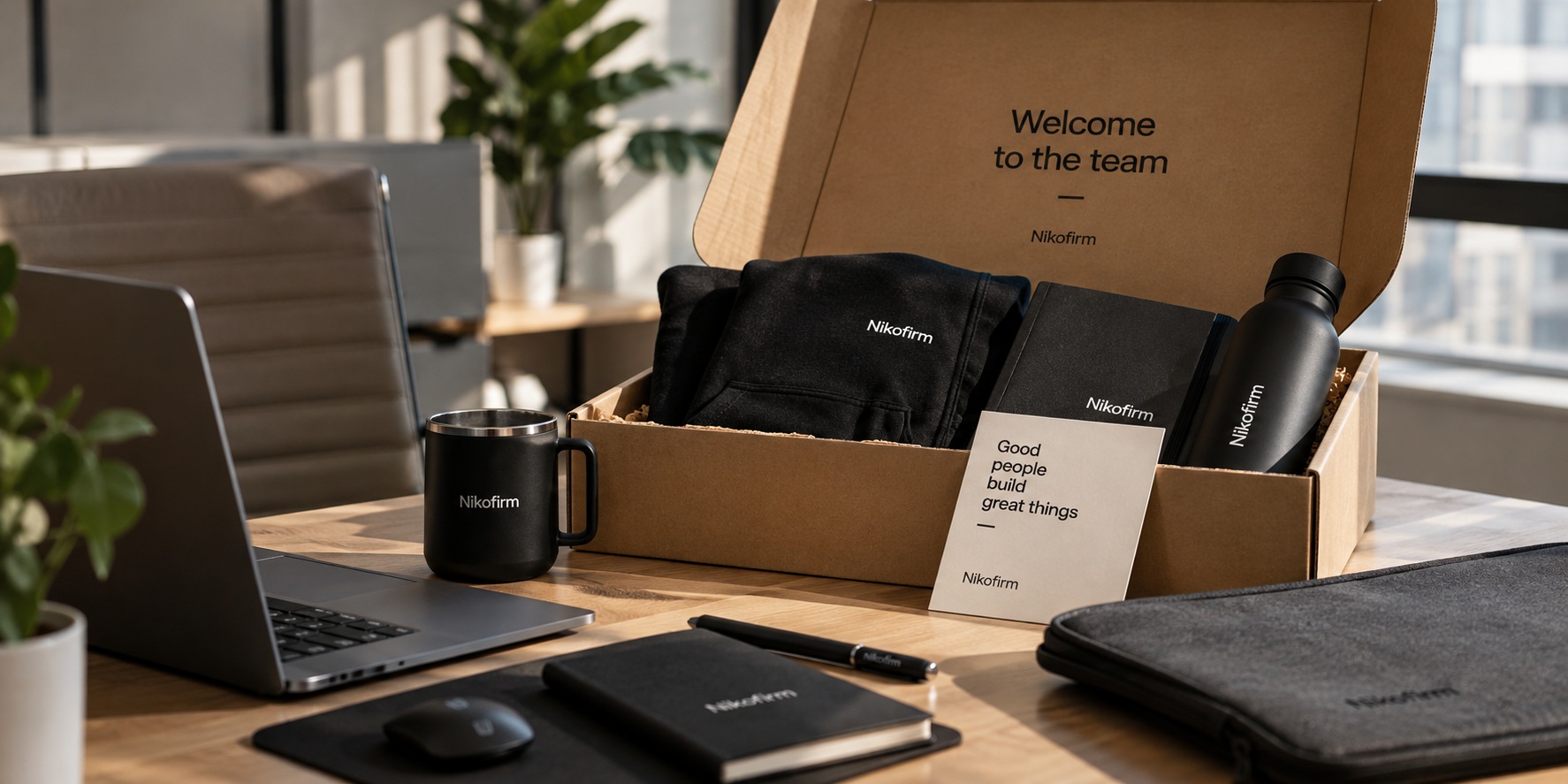
A new hire's first day sets the tone for everything that follows. Before they've written a single line of code or joined their first meeting, they form an impression of the company. A thoughtful swag kit tells them something simple but important: we were expecting you, and we're glad you're here.
Getting the contents right takes a little planning. What works for someone walking into a physical office isn't always the same as what serves a remote employee unboxing a package at their kitchen table. Below is a practical look at how to build kits that actually get used instead of tossed in a drawer.
Why Onboarding Swag Matters More Than People Think
Swag has a reputation for being throwaway marketing junk, and plenty of it is. A cheap pen with a logo doesn't build loyalty. But when the items are useful and chosen with care, they do real work.
A good kit reduces the awkwardness of a first day, gives the new person something to reach for, and quietly signals that the company invests in the people it brings on. For remote hires especially, physical items help bridge the distance. Someone working from home doesn't get the office tour or the group lunch, so a well-packed box becomes their tangible connection to the team.
There's a practical side too. Branded gear turns employees into casual ambassadors. A comfortable hoodie worn on a weekend or a solid water bottle carried to the gym puts the brand into everyday life without anyone feeling like they're advertising.
Core Items Every Kit Should Have
Some things belong in nearly any onboarding package, regardless of where the person works. These form the base you can build on.
- Apparel that people actually want to wear. A soft t-shirt or a warm zip-up in current cuts and colors beats a stiff, boxy shirt in a shade nobody likes. Quality here is worth the extra cost.
- A reliable drinkware option. An insulated bottle or a good tumbler gets daily use and holds up over time. Cheap plastic ends up in the trash within a month.
- A notebook and a decent pen. Even in a digital workplace, people still jot things down. A clean, well-made notebook feels premium and costs very little.
- A welcome note. A short card signed by the team or the manager adds a human touch that no branded object can replace.
What to Add for Office Hires
Someone joining a physical workspace has slightly different needs. Their kit can lean into the desk, the commute, and the shared environment.
Practical additions that fit office life include a laptop sleeve or bag for carrying gear between home and work, a set of desk accessories like a mousepad or a small organizer, and a keycard holder or lanyard they'll use daily. A reusable coffee mug for the office kitchen also earns its place, since it saves them from hunting for a clean cup during a busy morning.
You can also fold in a small guide to the building: where the good lunch spots are, how the coffee machine works, which conference rooms are usually free. It's a low-cost gesture that saves a new person a lot of quiet confusion in their first week.
What to Add for Remote Hires
Remote employees miss the incidental perks of an office, so their kits should work harder to make them feel included and set up for a comfortable home setup.
- Gear that improves the home workspace. Think a wireless mouse, a laptop stand, or a desk mat. These make the workday physically easier and show the company cares about their environment.
- Comfort items. Cozy socks, a candle, or good coffee and tea turn a functional box into a warm one. Remote hires notice these touches because no one is around to greet them in person.
- Snacks or a small treat. A few quality snacks make day one feel a little more like a celebration and a little less like logging into another video call alone.
- A clear guide to getting connected. Include the tools they'll need, who to reach for help, and how the team communicates. It cuts down the isolation of starting somewhere new without a desk neighbor to ask.
Keeping Kits Practical and Sustainable
The best kits avoid clutter. Five useful items beat fifteen forgettable ones, and a tighter selection almost always feels more considered. Before adding anything, ask whether the average person would keep it or quietly throw it away.
Sustainability is worth weighing too. Reusable and durable goods align with values that many new hires care about, and they last long enough to keep representing the brand. Recycled packaging and items made to endure send a message that goes beyond a logo.
Finally, leave room to personalize. A note with the person's name, a kit tailored to their role, or a small nod to their interests turns a standard package into something that feels made for them.
Building kits that hit all these notes takes some coordination, and companies looking to streamline the process often turn to specialists who handle the sourcing, assembly, and shipping. Nikofirm is one such option worth exploring, offering a way to put together onboarding swag that feels intentional for both office and remote teams without the logistical headache of doing it all in house.
Author — Roman Romanov
Manager